
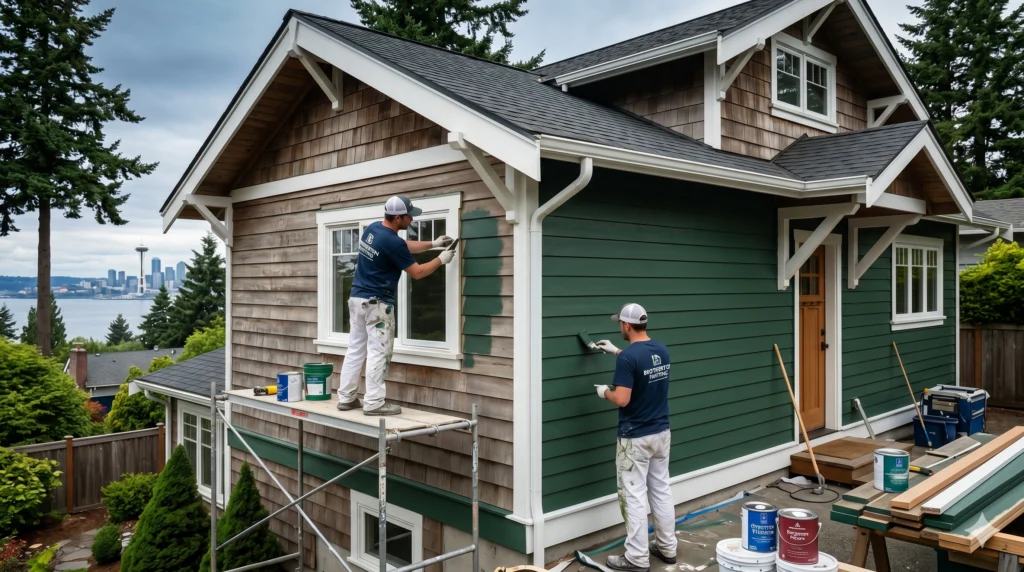
House painting cost Seattle homeowners see in an estimate can feel all over the place. One bid looks surprisingly low. Another is much higher. Then a third one comes in somewhere in the middle, but with hardly any detail. That is usually where the confusion starts.
At Brotherton Painting, we look at house painting a little differently. The price is not only about how many gallons of paint go on the wall. It is not just about choosing a color and counting the rooms. The surface condition, prep needs, need for quality paint, home height, labor time, and Seattle’s weather are all key factors that affect the overall cost and, by extension, the overall budget.
In the Seattle area, professional interior painting often falls between $3,800 and $8,500. Exterior painting often runs closer to $4,800 to $10,000. A smaller project with clean surfaces may cost less. A larger home with peeling paint, old siding, tall ceilings, detailed trim, or moisture damage can cost more.
So, what does it cost to paint a house here? There is no honest flat number without seeing the project. No serious contractor can give one universal number. But there are clear reasons why the numbers change.
Average Costs and House Painting Cost Seattle Homeowners Can Expect
National averages are a decent place to start, but they do not always match what happens in Seattle.1 A typical Seattle home may have older wood siding, damp shaded areas, worn trim, or interior walls that need more repair than they first appear to need. Here is a practical look at average costs:
|
Painting project |
Typical Seattle range |
What often affects the price |
|
Interior painting |
$3,800 to $8,500 |
Room count, wall condition, high ceilings |
|
Exterior painting |
$4,800 to $10,000 |
Siding condition, access, prep work |
|
2,000 sq ft interior |
$4,200 to $7,000 |
Layout, trim work, color changes |
|
2,000 sq ft exterior |
$5,800 to $9,200 |
Surface preparation, height, paint quality |
|
DIY exterior repaint, materials only |
$1,500 to $3,500 |
Paint, primer, tools, equipment rental |
These are not fixed prices. They are planning ranges. The total cost depends on the actual house, not just the square footage.
Why Square Foot Pricing Can Be Tricky
A lot of homeowners ask for a cost to paint per square foot. Square footage matters. No argument there. More sq ft usually means more paint, more labor hours, more masking, and more material costs. The problem is that square foot pricing can make two very different projects look the same on paper.
A clean 1,800 sq ft house with solid siding may be easier than a smaller home with flaking paint, failing caulk, damaged trim, difficult access, and extensive prep work. Inside, it is no different. Smooth interior walls in good shape are one thing. Dented, patched, stained, or heavily textured walls are something else.
That is why size alone should not drive the whole estimate. The quote should explain the painting project clearly: what is included, what needs repair, which paint will be used, how much prep work is planned, and whether the job includes one coat or two coats. Without that detail, the number does not tell you much.
Labor Costs Usually Carry a Big Part of the Price
Labor costs are one of the biggest reasons painting costs vary. Professional painters in Seattle may charge between $30 and $140 per hour, depending on experience, company overhead, and project demands. Seattle painters are pricing more than paint. They are pricing experience, crew size, overhead, insurance, safety needs, finish expectations, professional prep, and the labor hours required to do the job properly.
Prep is not the part people usually notice first. Still, it can make or break the whole paint job and determine whether the crew can deliver a high-quality finish that actually holds up. For exterior painting, prep may mean washing, scraping, sanding, caulking, masking, priming bare areas, protecting landscaping, and checking where moisture may be getting behind the surface.
In Seattle, that moisture check matters. Paint over damp, dirty, or failing surfaces can peel long before it should. When moisture gets trapped under the paint film, the finish does not have much of a chance.
Interior painting needs preparation as well. Furniture needs moving. Floors need protection. Drywall repairs, rough patches, nail pops, and trim lines all take time. High ceilings, vaulted ceilings, stairwells, built-ins, and older rooms can make the job more involved. This is where very cheap painting quotes can be risky. They may look good at first, but if the prep is thin, the finish can suffer.
Paint Quality and Material Costs Are Not Small Details
Paint quality affects the estimate, but it also affects what the house looks like months and years later. Better paint usually costs more. In return, it can offer stronger coverage, better washability, longer color life, and more reliable moisture resistance.
For exterior painting in Seattle, acrylic latex paint is often a practical choice because it handles damp weather and temperature shifts well. Paint selection matters here, and Sherwin-Williams and Benjamin Moore are common in professional painting services because their better product lines are built for durability.
Sherwin-Williams Emerald and Benjamin Moore Aura are examples often used when moisture, mildew, and fading are major concerns.2 Still, premium paint should be chosen for a reason. Not every home needs the most expensive product. The surface, exposure, color choice, and budget should shape the decision.
The material side of the estimate includes more than paint cans. Primer, caulk, tape, plastic, masking paper, patching materials, rollers, brushes, sprayer supplies, and safety materials all matter. Homes with multiple stories or steep roofs may require scaffolding and additional safety equipment, which can significantly increase labor costs. If scaffolding, ladders, lifts, or equipment rental are needed, the total cost climbs. Sometimes, a higher upfront cost means the quote is built around better products and enough labor to avoid shortcuts.
Exterior Painting in Seattle Has a Weather Problem
Exterior painting here has to respect the Pacific Northwest climate. Seattle’s wet climate adds pressure to every exterior paint job. Rain hangs around. Humidity stays high. Cool mornings and shaded siding can keep surfaces damp longer than people expect.
Exterior painting usually works best from June through September, and some projects can still work in early fall if the weather cooperates. That stretch of the year usually offers steadier temperatures, lower humidity, and better conditions for curing. Even then, a reliable painter does not trust the calendar by itself. The forecast matters. The actual surface matters too.
Seattle’s climate also makes proper surface preparation a requirement, not a bonus. If siding is chalky, damp, dirty, or already peeling, new paint can only improve the look for a while. The weak surface underneath will still work against the finish.
That is why a typical Seattle exterior paint job often includes washing, scraping, sanding, caulking, spot priming, and careful timing. Those steps also affect the cost.
Interior Painting Costs Depend on the Details Inside
Interior painting costs are not only about room size. The home’s interior layout matters. So do wall condition, ceiling height, number of colors, trim work, furniture, doors, closets, and the finish you want.
Painting interior walls the same color is usually more cost-effective than switching colors from room to room. A major color change may need extra coverage. Dark colors, bright whites, and smooth finishes can also require more careful prep.
If there are stains, cracks, patched drywall, moisture marks, or rough areas, those should be handled before paint goes on. Otherwise, the finished room may still show the old problems.
For homeowners looking for help with interior painting projects, the estimate should answer practical questions. Are ceilings included? Are baseboards included? What about doors and closets? Will the crew move furniture? Is drywall repair part of the price, or separate? Those small questions can significantly impact the total project cost.
DIY Painting Can Save Money, But Only in the Right Situation
DIY painting can be a smart choice for a small bedroom, a simple touch-up, or a low-risk space. If the walls are clean and the job is simple, DIY cost savings can make sense. A full exterior repaint is different.
Painting the exterior yourself is not just buying a few gallons of paint. It can mean paint, primer, brushes, rollers, drop cloths, masking materials, repair supplies, ladders, and possibly sprayer or equipment rental. For a Seattle exterior repaint, DIY materials alone may land around $1,500 to $3,500. And materials are only the beginning. Technique matters. Safety matters. Weather matters too.
Miss the prep, and the paint can fail sooner than expected. On homes built before 1978, disturbing old paint may also bring lead-safe requirements into the project. Paid contractors must follow federal Lead RRP practices in those cases, and Seattle has plenty of older homes where this can apply.
Professional painting costs more upfront, but that higher price is usually paying for more than labor. It is paying for experience, safer work, proper prep, product knowledge, and a finish that should hold up better.
How to Compare Painting Quotes
A painting quote can look cheaper for the wrong reasons. It may leave out surface prep, use cheaper paint, skip primer, exclude trim work, or assume one coat when the project really needs two. When comparing quotes from reputable contractors, look for:
- Labor and material costs
- Surface preparation details
- Paint brand and product line
- Number of coats
- What areas are included
- What repairs are excluded
- Lead-safe practices, if needed
- Cleanup and protection details
A professional painting contractor should make the scope easy to understand. If one quote includes washing, scraping, caulking, spot priming, premium brands, and detailed trim work, while another simply says “paint exterior,” those are not the same painting services. It also helps to understand the difference between residential and commercial painting services, since project size, scheduling, prep standards, and surface requirements can change how a quote is built. That difference matters even more for commercial properties, where timing, access, and surface wear can affect the scope.
The cheapest price is not always a bad choice. But it has to be clear what you are getting, especially if a general contractor is comparing multiple scopes for the same project.
Small Choices That Change the Cost to Paint
Some parts of a house look minor until the work starts. Doors, shutters, cabinets, railings, baseboards, window trim, and crown molding all take time. Clean lines and smooth finishes do not happen by accident.
Color also changes the cost to paint. Staying with the same color is often simpler. A big color change may need more coverage. Deep shades sometimes require specific bases. Glossier finishes can show flaws if the surface is not prepared well.
Even choosing the right paint for an exterior door matters. Doors take a lot of abuse. Rain, sun, fingerprints, and daily opening and closing all affect the finish. If the wrong paint is used, the door can chip, fade, or stay tacky longer than expected. Small product details matter before the work begins.
When a Free Estimate Makes Sense
If the house has peeling paint, faded siding, cracked caulk, mildew, worn trim, stained interior walls, or rooms that feel past their best, a free estimate makes sense.
A professional painter can inspect the surfaces and explain what the job really needs. That gives you a clearer view of the total cost, but also of the scope. You know what is included before you commit.
House painting is not just a fresh coat. It protects siding, improves curb appeal, updates the home’s interior, and makes the property feel cared for again. In Seattle, moisture changes the job. The prep and the paint have to be right, not just the color.
FAQ
How much does it cost to paint a house in Seattle?
Professional house painting in Seattle often ranges from $3,800 to $8,500 for interior painting and $4,800 to $10,000 for exterior painting. Size, prep work, access, paint quality, and surface condition all affect the final cost.
Why are painting costs in Seattle higher than national averages?
Seattle homes deal with rain, humidity, older surfaces, and a shorter exterior painting season. Those conditions often mean more prep work, better products, and more careful scheduling.
What affects exterior painting cost the most?
Exterior painting cost is usually affected by square footage, siding condition, number of stories, access, surface preparation, labor costs, paint quality, and weather timing.
What affects interior painting costs?
Interior painting costs depend on room size, wall condition, ceiling height, trim work, color changes, drywall repair, furniture moving, and the finish level you want.
Is DIY painting cheaper?
DIY painting can be cheaper for a small interior room. For full exterior painting, tools, materials, equipment rental, safety risks, and prep mistakes can reduce the savings fast.
Why does paint quality matter in Seattle?
Seattle’s climate brings moisture, humidity, and rain. Better paint, paired with proper preparation, can help resist mildew, fading, peeling, and early failure.
Should I get multiple painting quotes?
Yes. Multiple quotes help you understand price variation. Just compare the scope carefully, not only the final number.
When is the best time for exterior painting in Seattle?
Exterior painting is usually best during the drier season, often June through September. Paint needs suitable temperatures, dry surfaces, and enough time to cure properly.