
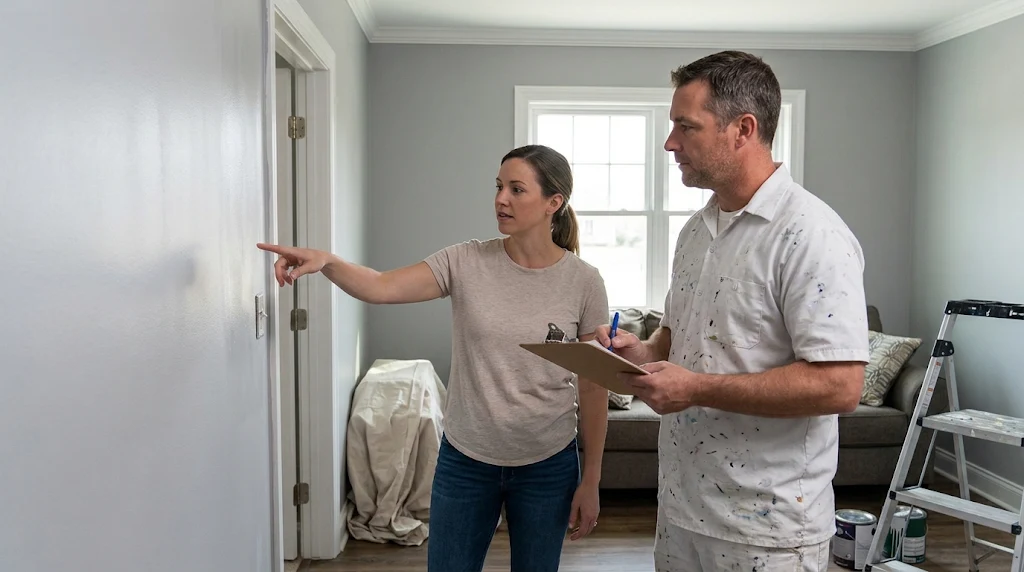
The most common signs of a bad interior paint job include uneven coverage, visible roller bands, dried drips, messy edges, patches of uneven sheen, stains bleeding through, and peeling paint. During the final walkthrough, photograph each concern, note where it appears, and ask your painters to review it with you against the written scope of work.
At Brotherton Painting, we provide interior painting and drywall repair. For your walkthrough, bring the written proposal and any approved paint samples so you can check the finish and confirm which repairs were included.
Before Judging an Interior Paint Job, Check the Viewing Conditions
Ask when the final coat was applied and when the finish will be ready to evaluate. Do not rub, wash, or test a fresh coat without checking its care instructions.
Use the room’s normal lighting, including natural light and installed fixtures. Normal room lighting reveals paint defects that may not be visible in direct daylight. Walk through the space from ordinary viewing positions before taking close-up photographs. The Painting Contractors Association’s P1 standard evaluates painted surfaces without magnification, from at least 39 inches away, under finished lighting conditions. This is an industry reference, not a substitute for your agreement.
Repainting existing texture does not automatically create perfectly smooth walls. Check which repairs and prep work were included before treating an existing irregularity as incomplete work.
Seven Common Signs of a Bad Interior Paint Job
1. Uneven Coverage or Missed Areas
Look for old paint showing through, missed spots around obstacles, and unfinished areas. Record whether the issue is isolated or widespread.
Ask whether you’re seeing the first coat or the finished wall. Uneven color alone can’t tell you whether the painters applied only one coat. Check which products and coats they used.
Sherwin-Williams lists a thin paint film as one reason the old color can show through. A second coat may improve coverage.
2. Obvious Roller Marks or Visible Brush Strokes
Compare pronounced roller bands and visible brush strokes with nearby sections that received the same finish. If the marks stand out under normal room lighting, ask your painter whether poor technique, uneven drying, or existing wall texture could explain them.
Distinguish ordinary roller texture from pronounced roller marks. Also note whether a band is physically raised or simply looks darker. Sherwin-Williams describes lapping as darker color or higher sheen where applications overlap; these differences can occur when paint dries too quickly during application.
Telegraphing flaws occur when imperfections on the surface show through the finish. Ask whether the concern involves tool texture, overlapping passes, or the underlying surface before agreeing to another coat.
3. Drips, Runs, and Raised Buildup
Check vertical areas, door edges, and trim for dried trails or thick ridges. Excess paint can run or sag rather than settle into an even film, as Benjamin Moore’s painting-mistake guide explains.
Ask how the ridge will be removed and the repair blended. A second coat will not flatten dried buildup.
4. Messy Edges and Paint on Unpainted Items
Inspect the boundaries between walls, ceilings, and trim. Look for wandering lines, missed strips, and paint transferred onto hardware, flooring, or fixtures that were outside the scope.
Whether painters use painter’s tape or cut in by hand, evaluate the result. Tape use alone does not establish quality work. Leaks beneath painter’s tape and damage during removal can leave edges requiring correction.
Ask how the painting company will fix edges and splatters without damaging adjacent finishes.
5. Uneven Sheen Across the Finish
A wall may match in color yet show dull patches beside shiny areas. This effect, often called flashing, can make a poor interior paint job especially noticeable as you move around the room.
Sherwin-Williams identifies several possible contributors, including uneven application thickness and differences in surface porosity. Skipped priming on areas that require it is one possibility, but appearance alone does not prove which prep work was omitted.
Ask whether the substrate was properly prepared and whether the specified primer and finish were appropriate. If the problem follows a repaired area, our guide to drywall patches showing through paint explains that specific issue.
6. Stains Showing Through New Paint
Record localized brown or yellow marks and ask whether they existed before the interior project began.
Red flags include a stain that spreads or darkens, or a wall that feels damp around it. If there’s an active leak, have it repaired before repainting. For a dry stain, check the primer’s technical data sheet to see which stains it blocks. A third coat of ordinary wall paint may still let the mark show through.
7. Peeling, Flaking, or Blistering
Lifting edges, detached flakes, or bubbles are warning signs that require investigation. Peeling shortly after a painting project should not be dismissed as ordinary wear without an assessment. Poor adhesion can cause peeling, flaking, or bubbling paint.
Sherwin-Williams lists several causes of blistering, including moisture, contamination, and unsuitable application conditions. Painting a dirty or wet wall can create adhesion problems, but bubbles do not establish a single cause.
Ask the professional painter to determine whether the new paint is separating from old paint or whether earlier layers are also failing. The proposed fix should address the cause, including any moisture issue, before new coats are applied. A cosmetic touch-up cannot reliably resolve active paint failure.
What 5,017 Coating Defects Reveal About New-Apartment Walkthroughs
In a 2016 study of 2,179 newly built apartments across 16 developments in Spain, 99.0% of recorded coating defects at handover fell into two categories: surface appearance problems and missing items or tasks. The study’s coating category covered work such as painting and tiling. See the original study and Table 7.
Defect category | Recorded defects | Share of coating defects |
Surface appearance | 3,568 | 71.1% |
Missing item or task | 1,397 | 27.8% |
All other categories combined | 52 | 1.0% |
Total | 5,017 | 100% |
Appearance problems were recorded about 2.6 times as often as missing items or tasks in the coating category. The researchers also described missing second coats as a common example of unfinished work on interior walls, although they did not publish a separate count for that issue. Two key takeaways for your walkthrough: inspect each room for visible defects, then use the written proposal to check for missed surfaces or unfinished work.
Methodology. The study examined 52,552 defect records from one contractor’s handover inspections. We used only the Coatings column in Table 7, divided each count by 5,017, and rounded the results to one decimal place. The combined share for the two largest categories is 4,965 ÷ 5,017. These are shares of recorded defects from new construction in Spain. The study did not measure how often defects occur in Seattle repainting projects.
How to Document the Initial Signs of a Bad Paint Job and Agree on a Fix
Review the initial signs of a bad paint job with your painting company. Take a wide photo and a close-up of each concern, then note its location and appearance, such as “dull patch beside the bedroom door.”
Create a short punch list with four details for every item:
- Location: room, wall, and nearby landmark.
- Observation: missed area, drip, uneven sheen, or peeling.
- Agreed action: what the painting company will inspect or fix.
- Follow-up: when the correction will be ready to review.
Ask your painter about the original surface condition, surface preparation, and products used. If you suspect low-quality paint or improper materials, check the manufacturer’s technical data sheet. Some paint types are approved for both interior and exterior use, so check whether a product labeled “exterior paint” is also approved for your interior surface. If adhesion is a concern, ask whether the wall was properly cleaned and dry. Even quality paint can fail on a dirty or wet wall.
Cleaning surfaces removes dirt and grime for better paint adhesion. Sanding surfaces smooths out imperfections for a better finish.
Ask whether a touch-up will blend or whether the painter needs to repaint a larger section. Confirm any necessary prep, primer, and finish coats before the correction begins. If the painter proposes work outside the original scope, ask for a written price and a description of the added work before agreeing to spend more money.
Do not start scraping or sanding while the painters are assessing the issue. That can change the evidence and complicate the discussion about the appropriate fix. If the explanation remains unclear or peeling continues, consider an independent assessment before authorizing more work.
Check the Repairs Before Signing Off
When reviewing a professional paint job, check each repair under the same lighting. Look for changes in texture or sheen and fresh marks on nearby trim or fixtures. Record any remaining concerns before signing off on the whole job.
Ask when you can clean the painted surfaces, especially in high-traffic areas. Allowing paint to cure for the time specified by the manufacturer helps you avoid washing it too soon. In the long run, a record of the product, color, and sheen will help you choose matching paint for touch-ups.
Planning an Interior Painting Project in Seattle?
Explore our interior painting services in Seattle or request a painting estimate. Tell us which rooms you’d like painted and which wall repairs you want included in the quote.
Frequently Asked Questions
How Do You Fix Dried Paint Drips on a Wall?
Add the drip to your walkthrough list. Ask your painter to smooth the dried ridge before repainting and match the surrounding texture and sheen. If the touch-up would still show, discuss repainting the wall from corner to corner.
Why Is My Paint Bubbling on the Wall?
Paint can bubble when the surface is damp or contaminated, or when conditions during application affect adhesion. If the bubbles are near a window, below a plumbing fixture, or beside a stain, note that location when you contact your painter. Ask them to check for moisture and see which layer has separated before proposing a repair.
Why Is My Paint Peeling Off the Wall?
Peeling can start between the new and old coats or deeper in the existing finish. If it appears after the walkthrough, take a close-up and a photo that shows where it is on the wall. Tell your painter when you first noticed it and whether it has spread. Leave the loose edges in place for the inspection.
Why Does My Paint Look Patchy After Painting?
Once the paint is ready for visual inspection, look at the wall from two normal viewing positions. If the old color shows through from both spots, ask your painter to check coverage. If a patch becomes more noticeable as you move, particularly over a drywall repair, ask them to check whether the sheen differs from the surrounding finish.