
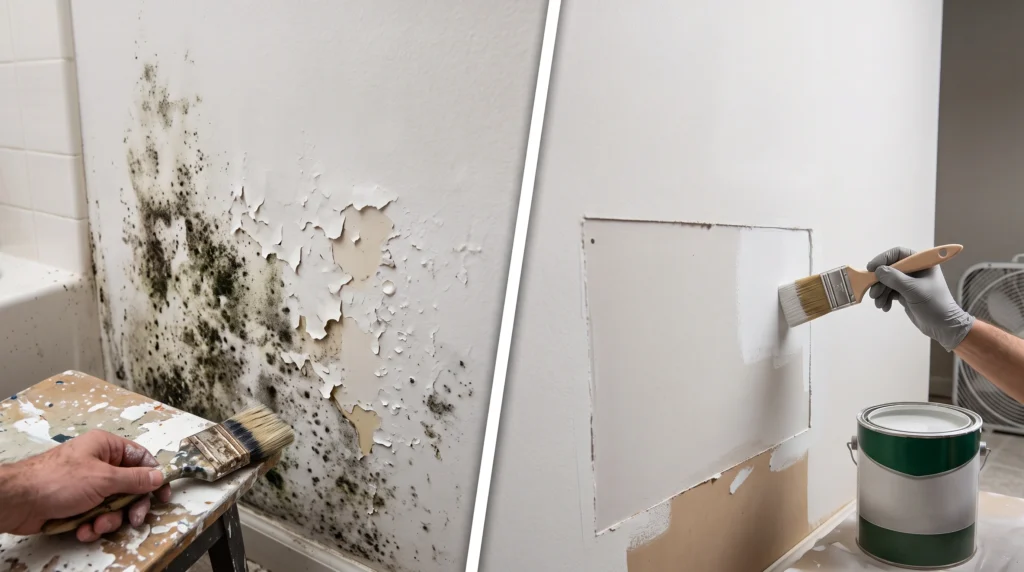
Can you paint over mold if you use a strong primer or mold-resistant paint? No. Paint may hide mold stains temporarily, but it does not remove the growth or correct the moisture problem that caused it.
Mold can remain active beneath the new paint, especially when drywall, wood, or a bathroom ceiling stays damp. The coating may eventually stain, bubble, crack, or peel.
Before repainting, identify and fix the moisture source, remove the existing mold, evaluate the affected material, and let the surface dry completely. Primer and paint are the final steps, not the treatment.
Can You Paint Over Mold?
You should not apply paint or ordinary primer directly over active mold. Mold is a type of fungus that can begin growing when airborne spores land on a damp surface.
The EPA advises homeowners not to paint or caulk moldy surfaces. Mold should be removed, and the surface must be dry before painting. Otherwise, the paint may fail while the underlying growth continues.
Painting over mold can also conceal the true extent of the problem. If the mold is extensive, hidden, recurring, or associated with significant water damage, professional mold removal in Seattle may be necessary before repairs and repainting begin.
Why Painting Over Mold Fails
Paint is a finish, not a mold treatment. Standard latex or oil-based paint cannot repair damaged material, eliminate moisture, or remove contamination.
Painting over mold can lead to:
- Mold growth beneath the new paint
- Recurring dark or discolored stains
- Poor primer and paint adhesion
- Bubbling, cracking, or peeling
- Continued damage to drywall or wood
- Mold returning around the painted surface
Stain-blocking primer may conceal discoloration, but hiding stains is different from fixing their cause. A resistant paint also cannot stop mold when a leak, condensation, or excessive humidity remains.
Mold and Mildew: What Is the Difference?
The EPA explains that mildew refers to certain types of mold or fungus. The term is commonly used for mold with a flat growth pattern.
Homeowners often describe flat growth on a shower wall or bathroom ceiling as mildew. Mold is the broader term and can appear in different colors and textures. Appearance alone cannot confirm whether the growth is limited to the surface or extends into a porous material.
Both mold and mildew should be removed before primer or paint is applied.
Fix Moisture Issues Before Treatment
Moisture control is the foundation of mold prevention. Cleaning the wall without addressing the water source allows the problem to return.
Possible sources include:
- Plumbing, roof, or window leaks
- Condensation on walls and ceilings
- Inadequate bathroom ventilation
- Persistent basement dampness
- High humidity in bathrooms and laundry rooms
- Water trapped behind drywall
An exhaust fan can reduce bathroom humidity, but it will not repair a leak or remove existing mold. The moisture source must be identified and corrected before the affected area is treated.
Can You Paint Over Mold on Drywall?
Drywall is porous, so mold may extend beyond the painted surface and enter the paper facing or core. Painting over mold on drywall can trap the problem without addressing damaged material.
Drywall that is soft, saturated, deteriorated, or extensively contaminated may need replacement. After the moisture problem and mold have been addressed, professional drywall repair can restore the wall to a stable, paint-ready condition.
Recurring stains, bubbling paint, soft drywall, and a persistent odor may indicate hidden mold behind a wall or ceiling. Opening the wall can disturb mold spores, so uncertain or extensive damage should be professionally assessed.
Cleaning Mold on Different Surfaces
Whether a material can be cleaned depends on its porosity, physical condition, and the depth of contamination. Before attempting cleanup, homeowners should consider the size of the affected area, whether the mold may be hidden, and whether contaminated porous materials can be safely removed. Extensive, recurring, or concealed growth should be professionally assessed.
Surface | General approach |
Drywall | Damaged or deeply contaminated sections may require replacement. |
Wood | Must be evaluated for moisture, deterioration, and depth of growth. |
Concrete | May be cleaned if it remains sound, but the source of dampness must be corrected. |
Nonporous surfaces | Hard surfaces can generally be scrubbed with detergent and clean water, then dried thoroughly. |
Absorbent materials | Heavily contaminated porous materials may be impossible to clean completely and may require disposal. |
The EPA does not recommend the routine use of biocides such as household bleach for mold cleanup. Dead mold can still cause reactions, so it must be physically removed rather than simply killed.
Never mix bleach with ammonia or any other cleaner. When cleaning a small mold-affected area, wear appropriate protective equipment, including gloves, eye protection, and an N95 respirator.
Mold-Resistant Paint and Mildew-Resistant Paint
Mold-resistant paint can help prevent mold growth on the finished paint film in high-humidity rooms. It cannot eliminate existing mold inside a wall, on damaged drywall, or beneath an old coating.
The same limitation applies to mildew-resistant paint. These products are preventive coatings for surfaces that have already been cleaned, repaired, and allowed to dry completely.
KILZ states that its Mold & Mildew Primer should be applied only after the surface is free of mold and mildew. Benjamin Moore also advises against painting over mildew because it can grow through new paint.
Products such as Zinsser Perma-White are designed as mold- and mildew-resistant finishes. Zinsser Mold Killing Primer has separate product-specific label claims, but it should not replace moisture correction, removal of damaged material, or proper surface treatment.
Priming and Painting After Mold Removal
Applying primer should begin only after the moisture source has been fixed and the surface is clean, stable, and dry.
The correct sequence is:
- Identify and repair the source of moisture.
- Remove the mold and unsalvageable material.
- Clean the remaining surface appropriately.
- Let the surface dry completely.
- Complete the necessary repairs.
- Apply a suitable primer.
- Finish with paint selected for the room conditions.
Once the surface is ready, professional interior painting services can complete the priming and repainting stage.
How to Prevent Mold From Returning
To prevent mold from returning:
- Repair water leaks promptly
- Use an exhaust fan during and after a shower
- Reduce persistent indoor humidity
- Dry damp materials completely
- Monitor repaired walls for new stains
- Investigate recurring odors or peeling paint
- Use mold-resistant paint in appropriate high-humidity areas
Resistant paint supports prevention, but moisture control remains the most important factor.
Painting should begin only after the mold, damaged material, and moisture source have been properly addressed. A clean, dry, and stable surface gives primer and finish paint the conditions they need to adhere and perform as intended. If staining, odor, dampness, or peeling returns, the underlying problem requires further investigation rather than another coat of paint. Once the underlying issue has been resolved, you can request a free estimate for the necessary surface repairs and repainting.
FAQ
Can you paint over mold if you use mold-resistant paint?
No. Mold-resistant paint is intended to help prevent growth on a clean paint film. It does not remove existing mold or repair the underlying moisture issue.
What happens when you paint over mold?
The mold may continue growing beneath the new paint. Stains can return, and the coating may bubble, crack, or peel.
Can you paint over mold in a bathroom?
Not until the mold has been removed, the moisture source has been addressed, and the bathroom surface is completely dry. Ventilation and humidity control are also important.
Does primer kill mold?
Ordinary primer does not kill mold. Some specialty primers have specific label claims, but they do not replace proper cleanup, moisture correction, or removal of damaged material.
When should moldy drywall be replaced?
Replacement may be necessary when the drywall is soft, saturated, deteriorated, extensively contaminated, or affected beneath the visible surface.
When is professional mold removal necessary?
Professional help should be considered when mold is extensive, hidden, repeatedly returns, affects porous materials, or follows significant water damage.