
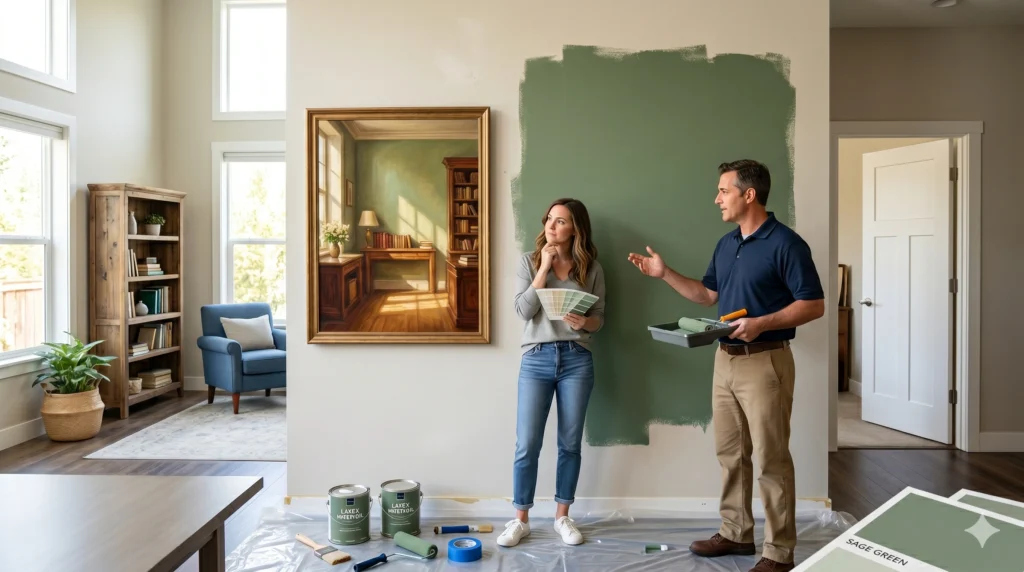
A paint swatch can only tell you so much. It shows the color, but not the room.
That is where paintings of interiors are surprisingly useful. They show color next to shadow, furniture, trim, daylight, a half-open door, a quiet corner, or a table that has clearly been used for years. In other words, they show color in real life.
At Brotherton Painting, we see this all the time. A homeowner may be drawn to a color because it looks wonderful in a picture, a design trend, or a guide to choosing exterior paint colors, but the real question is different: will it still feel right on their own painted walls, with their lighting, their drywall, their rooms, and their day-to-day routine?
That is where inspiration needs a practical plan, not just a pretty reference image or a quick comment on what looks good online.
Interior Exterior Painting Starts With the Room, Not the Swatch
Good interior and exterior painting is not just about picking colors and opening a can. A professional painter looks at the whole space first and focuses on how the room is present in daily life. How much light comes in? Are the walls smooth or rough? Is there old drywall damage? Does the room need to feel calm, brighter, warmer, or cleaner?
An artist thinks the same way, just in a different form. In paintings of interiors, color is never floating by itself. It sits beside wood, fabric, shadow, trim, and human life, creating a kind of visual language that homeowners can study before making a color selection. In the real world, that matters because paint is never seen in isolation. That is why those images can help people slow down instead of turning one attractive shade into the whole plan.
A pale wall in a painting may look soft because the room has warm light. A dark green may feel elegant because it is balanced by white trim. A gray wall may look peaceful in one picture and cold in another. The color did not change. What happened around it did.
What to Check | Why It Matters Before Painting |
Natural light | Colors can look warmer, cooler, darker, or brighter depending on the room |
Wall condition | Satin and semi gloss can make dents, patches, and uneven drywall more visible |
Room use | Busy areas need more durability than quiet rooms |
Trim and door color | Contrast can make a room feel sharper or softer |
Existing furniture and storage | A color may feel different once the space is full |
This is why a color that works in someone else’s house may not work in yours. It is not a bad color, and it does not lose its significance as a design choice. It may just be in the wrong room, under the wrong light, or beside the wrong furniture.
Garage Walls Need More Than a Pretty Color Selection
A garage usually has a rougher life than the rest of the house. Mud comes in on shoes. Storage bins get stacked against walls. Bikes, tools, fumes, dust, dirt, and odd stains all become normal. A child’s bike, a couple of storage shelves, or one careless turn with a toolbox can leave marks fast. If a wife, husband, roommate, or child uses the garage every day, everyone will be glad the walls are easier to wipe down later. A soft matte wall may look polished in a painted interior scene, but in a garage, the finish needs to be tougher.
Interior latex paint, especially formulas made for high-traffic areas, is often recommended for garage walls for a reason. It dries quickly, has minimal odor, and is easier to clean up than oil-based paint. An attached garage or a garage used as an everyday entry, that makes the space easier to manage.
Light colors are practical as well. White, gray, and beige can brighten the room, make it feel more open, and soften the look of small dirt marks. Dark paint can make a garage feel smaller almost immediately, especially when lighting is weak or storage is heavy.
The right paint depends on what the garage actually does. A hobby space, a basic storage area, and a working garage do not all need the same wall finish. These examples matter because the end user of the space may need durability, brighter walls, easier cleanup, or a finish that can handle daily contact.
Latex Paint, Primer, and the Part Nobody Sees Later
Latex paint is practical, especially for garage walls and everyday interior walls. Interior paint also contains more pigment for better coverage and less resin than exterior paint, which can help create a harder finish that resists stains and scuffs. Still, it does not hide everything. A dusty wall, an old stain, a glossy surface, a crack, or a bad patch can still show up in the final result, even when the paint itself is the right product.
That is why the prep matters so much, especially when the goal is ease of cleaning after the project is finished. Surface preparation is the most critical factor for paint longevity because it often includes cleaning, sanding, patching, and priming before the final coat goes on.
Garage walls should be treated based on what the surface actually needs. Cleaning, sanding, patching, and primer may all be part of the job. A stain-blocking primer is especially important on oil stains, bare concrete, or older areas that may take paint unevenly. It helps the finish bond properly and last longer.
Two coats may be needed for the wall to look clean and even. Dark-to-light color changes almost always need extra coverage, and patched drywall often does too. Finally, the second coat is usually where the job starts to look finished.
This is one reason professional interior painting makes such a difference. Everyone sees the final coat, but the prep work decides how long that clean finish lasts.
Exterior Paint Is Not the Better Choice for Interior Walls
Exterior paint sounds tough, so the confusion is fair. Garage walls get bumped, scraped, and marked up, and “exterior” can sound like extra protection. Still, it is not the right choice just because the room works hard.
Exterior paint is made for outdoor conditions: rain, UV exposure, temperature changes, mildew, dirt, fading, and movement in siding or trim. It is formulated with more binder, or resin, so it can withstand weather, and it often includes additives that help resist mildew, dirt, and fading. It needs to stay flexible because exterior materials expand and contract throughout the year.
Interior paint is built for indoor surfaces instead. It is meant to cover cleanly, stick well, wash better, and keep VOC levels lower.1 That matters because interior paints are specifically formulated with lower levels of volatile organic compounds, or VOCs, making them safer for indoor use than exterior paints, which often contain higher VOC levels for outdoor durability.2 Interior latex paint also usually dries faster and has less odor than exterior paint, which can smell stronger because of additives used for mildew resistance and durability.
So, no, exterior paint should not be used as a durability hack for interior walls. It is tougher in the wrong way. Use the paint that matches the space. Interior rooms need interior paint. Exterior surfaces need exterior paint. The same rule applies to garage walls, where product choice should depend on use, surface condition, fumes, access, and cleaning needs.
Semi Gloss, Satin, and Why Sheen Changes Everything
Sheen can quietly make or break a painting job.
In paintings of interiors, artists often control shine carefully. Too much glare can make even a good paint color feel wrong. The room starts to look shiny instead of clean. In real homes, paint finish has a job to do. It has to look right, but it also has to handle marks, scuffs, and cleaning.
Semi-gloss is durable and easy to wipe down, so it makes sense on trim, doors, and areas that get touched often. Satin has a softer look while still offering practical durability. For garage walls, both satin and semi-gloss can be useful because they create a more washable surface.
Still, semi-gloss should not go everywhere. Large rough drywall walls can look worse with extra shine because the finish brings flaws forward. Bedrooms and living rooms often feel better with satin or eggshell. In garages, laundry areas, or busy spaces, durability may be more important.
The finish needs to fit the room first. The color comes after that.
How to Use Paintings of Interiors Without Copying Them
A painting can influence a room without needing to be copied exactly. The shade does not have to match. The furniture does not have to match. Even the light can be completely different. What matters is the balance between the colors.
Pay attention to where the strongest color shows up. Is it doing the main work on the wall, or is it used in furniture or a smaller accent? Notice whether the walls feel lighter than the floor. Look at how the trim outlines the space. See whether the room feels open because the colors are pale, or because the design itself is not crowded. The same idea applies to English cottages, modern Seattle homes, and older rooms with imperfect drywall: color works only when the setting supports it.
That is a better way to learn from a painting before choosing paint, because the image becomes a reference instead of a rule.
It also keeps homeowners from making a familiar mistake: falling for a color in a picture and then discovering it feels too cold, too dark, too flat, or too busy in their own room. A short article or design post can be helpful, but it should not replace testing the color in the actual space.
What a Professional Painter Should Bring to the Process
A good painter does more than apply paint neatly. They should provide clear guidance and help you understand the process before the job starts.
A professional estimate should be in writing and should break down labor, materials, the number of coats, and any additional fees. A painting contractor should be properly covered before the work starts. That means an active license, General Liability insurance, and Workers’ Compensation insurance. Homes built before 1978 need extra care, too. If lead-based paint may be disturbed, EPA RRP-certified contractors are required.3
The way a contractor communicates also matters. A responsive contractor will explain the timeline, prep work, primer needs, and expected outcome before the project is underway. Their explanation should be specific enough to help the homeowner understand what will happen next, not vague enough to leave them guessing.
Painting is visual, yes. But the work succeeds or fails long before the final color dries. It is also practical. The best results come from both sides working together, with clear expectations from the beginning of the project to the final walkthrough.
Bringing Art-Inspired Color Into a Real Home
Paintings of interiors are useful because they remind us to look at the full room. Not just the color. Not just the wall. The whole space, including the way light, furniture, trim, and daily use come together.
They can help you see why a room works before you ever choose a paint color. Maybe it is the way the light moves. Maybe it is the contrast, the trim, or a soft color that still holds the space together. Once that inspiration is clear, the real painting decisions begin: latex paint, primer, sheen, surface prep, and application. That is the point where a design idea turns into a real plan for the home.
For Seattle-area homeowners, those details matter. Interior rooms, garage walls, trim, doors, and older drywall should not all be handled the same way. A picture can point the project in the right direction, but lasting results come from the right products and careful work.
Can paintings of interiors help with choosing colors?
Yes. They show the whole room relationship, not just one shade. Light, trim, furniture, shadow, and texture all change how a color feels.
What paint works well for garage walls?
Interior latex paint is often recommended because it dries fast, has minimal odor, and is easier to clean up than oil-based paint.
Is semi-gloss good for garage walls?
Yes. Semi-gloss can be useful because garage walls often need a cleanable, durable surface. Satin is a good option if you prefer less shine.
Should garage walls be light or dark?
Light colors are usually more useful. White, gray, and beige help reflect light, make the garage feel open, and soften the look of small scuffs.
Do garage walls need primer?
Often, yes. Primer helps when walls have stains, raw concrete, patched drywall, or older paint that may not bond evenly.
Can exterior paint be used inside?
It is usually not the right choice. Exterior paint is built for weather. Interior paint is built for indoor walls, lower odor, adhesion, and washability.
Why does sheen matter?
Sheen affects glare, cleaning, and how much the wall reveals dents, patches, and surface texture.
When should a homeowner hire a painter?
A professional painter can help with drywall repairs, garage walls, primer, higher-sheen finishes, older homes, and color choices that are hard to settle on.